If you are new to the online world, learning digital marketing is the best thing you can do for your future self. And here’s the good news: this guide on digital marketing for beginners will help you understand exactly how it all works. It’s not magic! it’s a smart strategy that you can learn for free.
Think about this, you open Instagram, scroll through the reels, and suddenly a promotion for a product that you were thinking about yesterday pops up. Creepy?
Not a bit. That’s the power of digital marketing in action.
By the end of this post, you’ll have a clear roadmap to start your digital marketing journey without spending a single rupee. Whether you’re a student, freelancer, or small business owner, this step-by-step guide to digital marketing for beginners will show you where to start and what really matters.
What is Digital Marketing in Simple Words
Digital marketing is the practice of promoting products, services, or ideas through the internet and digital devices. Unlike traditional marketing methods such as billboards or print ads, digital marketing allows businesses to reach their audience directly on platforms where they already spend time—Google, social media, email, and websites.
In this introduction to digital marketing for beginners, you’ll learn how businesses reach people using online platforms like Google, social media, and email.
At its core, digital marketing is about visibility, engagement, and building trust. It uses data, technology, and creative strategies to connect brands with the right people at the right time, whether that’s through search results, social feeds, or personalized email campaigns.
In simple words, digital marketing is just marketing done online, but smarter and more targeted.
Why It Matters Today
We are living in an age when individuals spend more time on the internet than ever. Have a look at these facts:
- Over 5.5 billion people use the internet globally (around 68% of the global population).
- The average person spends six and a half hours online daily
- 56% of people prefer to shop online over shopping at a store.
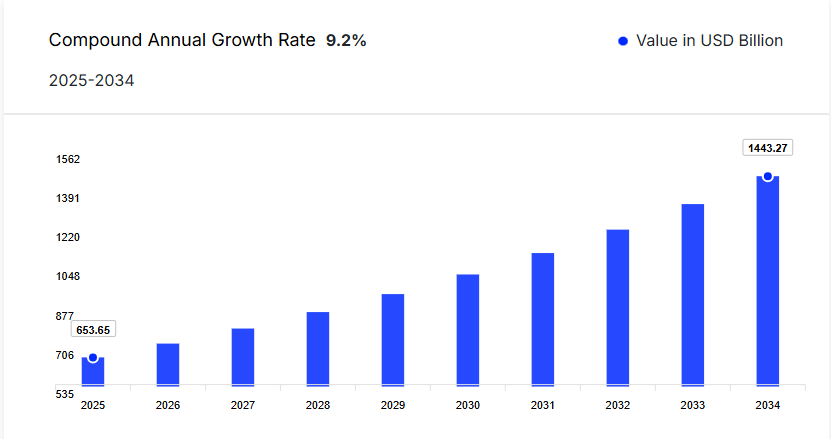
Image Scource- expertmarketresearch
If your company is not online, you do not exist for most of your potential customers.
Online marketing brings the playing field back to square. Small companies can now rival big brands by targeting intelligently and creating thought-provoking content. You’re able to reach precisely the right people at the most opportune time, and measure your results in an instant.
In brief,digital marketing isn’t a tool – it’s the pulse of contemporary business expansion.
The Difference Between Traditional Marketing and Digital Marketing (Explained Simply)
Let’s get it by a small story.
Let’s say that you have a bakery called Tasty Crumbs. You make the fluffiest cupcakes in town, but not many individuals are aware of your bakery.
With traditional marketing, you would print out colorful pamphlets, post up posters around your local area, or perhaps even take out a newspaper advertisement that reads “Fresh Cupcakes, Buy 2 Get 1 Free!” – and hope that someone close by sees it.
Today, in digital marketing, it is quite different. You’d open an Instagram page, post irresistible cupcake photos, run Facebook ads targeting people within 5 km, or email offers to your subscribers.
Both aim to attract customers, but the difference lies in how and where you reach them. As a beginner, you need to know the basics of digital marketing.
Here’s why they are different:
| Aspect | Traditional Marketing | Digital Marketing |
|---|---|---|
| Cost | Expensive printing, distribution, and ad space cost money | More affordable and scalable – you can start with a small budget |
| Reach | Local – your message stays limited to nearby areas | Global – you can reach anyone, anywhere |
| Targeting | Broad – same ad for everyone | Specific – ads can target by age, interests, and behavior |
| Tracking | Difficult – you can’t measure exactly how many saw your ad | Easy – tools show who clicked, bought, or visited your website |
| Speed | Slow – requires planning and physical setup | Instant – you can launch a campaign in minutes |
The takeaway?
Digital marketing gives you control, targeting, and measurable results that traditional marketing simply cannot. In short, digital marketing opens the door to a worldwide audience – instantly and affordably.
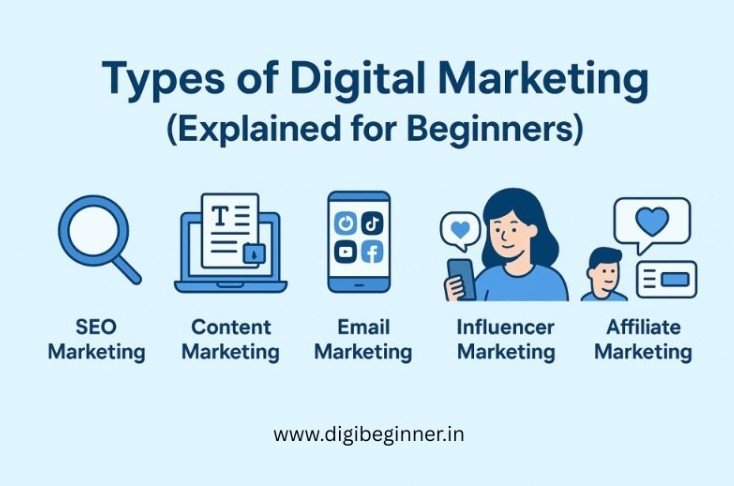
Types of Digital Marketing for Beginners (Explained Simply)
This is a very broad field with numerous branches. Here are the most significant ones beginners should learn:
1. SEO Marketing (Search Engine Optimization) – Ranking on Google
SEO is the process of optimizing your website so that it appears on Google (or other search engines) when people search for products, services, or information.
Why It’s Effective:
- People trust Google results.
- Brings in free, long-term traffic.
- Sets your brand up as an authority in your niche.
Best Practices:
- Research keywords your audience is searching for.
- Optimize on-page elements (titles, meta descriptions, headings).
- Improve site speed and mobile friendliness.
- Build backlinks from trusted websites.
Example:
A cooking blog optimized for the keyword “food to try as a beginner” can appear on Google’s first page and attract thousands of readers monthly.
Pros:
- Free once you rank.
- Long-term traffic.
- Establishes brand credibility.
Cons:
- Takes time (3–6 months for visible results).
- Requires regular updates to stay ahead.
- Google SEO Starter Guide is a great resource if you’re just beginning.
Mastering SEO is one of the first steps in any beginner’s guide to digital marketing because it builds the foundation for long-term online visibility.
Want to dive deeper into how SEO actually works? Read our full guide on SEO Basics for Beginners: Step-by-Step Guide to Ranking on Google
2. Content Marketing – Blogs, Videos & Guides
Content Marketing is all about producing and sharing content (blogs, videos, podcasts, infographics) that solves your audience’s problems and earns their trust.
Why It’s Effective:
- Educates and nurtures your audience.
- Drives traffic from multiple sources (Google, social media).
- Works great for both B2B and B2C businesses.
Best Practices:
- Distribute content for solving problems, not selling.
- Use different formats: blog posts, YouTube videos, Instagram posts, and guides.
- Repurpose content across channels (turn a blog into a Reel or infographic).
- Keep it consistent – quality + frequency establishes authority.
Example:
A skincare company publishing a blog “5 Natural Remedies for Glowing Skin” and subsequently creating a YouTube video on the same subject.
Pros:
- Inexpensive as compared to advertising.
- Builds long-term relationships.
- Improves SEO naturally.
Cons:
- Time-consuming to create high-quality content.
- ROI is slower to calculate.
Get a good grip on content marketing, as a beginner it will help you to stand out in the field of digital marketing from others.
3. Social Media Marketing – Build a Community Around Your Brand
Social Media Marketing is using platforms like Instagram, Facebook, TikTok, YouTube, and LinkedIn to engage with your target audience and expand your brand.
Why It’s Effective:
- Establishes immediate relationships with customers.
- Great for increasing brand awareness quickly.
- Can turn your business viral overnight.
Best Practices:
- Choose platforms where your audience hangs out.
- Post engaging content (Reels, polls, memes, videos).
- Keep a regular posting schedule.
- Respond to comments/messages for establishing trust.
- Monitor outcomes with analytics tools.
Example:
A cafe sharing daily coffee-making Reels on Instagram, running polls like “Latte or Cappuccino?” on Stories, and engaging with followers in comments.
Pros:
- Builds a loyal community.
- Free to start.
- High engagement potential.
Cons:
- Time-consuming.
- Platform algorithms can reduce reach anytime.
Mastering social media marketing is one of the pivotal steps in any beginner’s guide to digital marketing because it builds the foundation for long-term online visibility.
4. Email Marketing – Building Relationships
Email marketing is sending targeted, personalized emails to your subscribers to nurture relationships and drive sales.
Why It’s Effective:
- You own your audience (not dependent on algorithms).
- Very high ROI (some studies show $1 spent = $36 return).
- Excellent for repeat business and loyalty.
Best Practices:
- Create your email list through lead magnets (discounts, free guides).
- Personalize your emails (use names, segment your audience).
- Create value before selling (tips, updates, stories).
- Optimize subject lines to boost open rates.
Example:
Weekly style tips and a 10% discount code are being sent by an online clothing retailer to subscribers.
Pros:
- Low cost, high return.
- Builds strong, long-term relationships.
- Great for nurturing leads.
Cons:
- Requires effort to grow your email list.
- Poorly written emails may land in spam.
- Beginner tool: Mailchimp for creating and sending campaigns.
Email marketing is one of the most important steps in digital marketing for beginners.
5. Influencer Marketing – Power of Recommendations
Influencer marketing means partnering with influencers or creators who already have your target audience’s attention.
Why It’s Effective:
- People trust recommendations from influencers.
- Works especially well in niches like beauty, food, and fashion.
- Micro-influencers (small creators) often have higher engagement rates.
Best Practices:
- Choose influencers whose audience matches your target market.
- Focus on authenticity (audiences spot fake promotions easily).
- Use micro-influencers for affordable, high-engagement campaigns.
- Track results (engagement, sales, traffic).
Example:
A skincare brand collaborates with a micro-influencer on Instagram who reviews their new face cream in a Reel.
Pros:
- Builds instant trust.
- Expands brand reach quickly.
- Affordable with micro-influencers.
Cons:
- Results may vary if influencer isn’t a good fit.
- Hard to control messaging completely.
Don’t get overwhelmed by all of this! You just need to know the basics to start your journey. This guide to digital marketing for beginners will help you to do that exactly.
6. Affiliate Marketing – Earn by Promoting Products
Affiliate marketing is when you promote other companies’ products and earn a commission for each sale.
Why It’s Effective:
- No product creation needed.
- Low cost to start.
- Passive income potential.
Best Practices:
- Promote products you trust and would recommend.
- Use honest reviews and tutorials to build credibility.
- Focus on evergreen products (things people always need).
- Disclose affiliate links to stay transparent.
Example:
A blogger writes “Top 10 Best Headphones Under ₹2000” and links to Amazon products. Every time someone buys, the blogger earns a commission.
Pros:
- Low risk, no inventory.
- Works well for bloggers and YouTubers.
- Can scale to passive income.
Cons:
- Highly competitive (many affiliates promote the same product).
- Relies on platform policies (Amazon commissions can change).
If you want to earn as well as learn affiliate marketing is a great place to start your journey.
7. Paid Advertising (PPC) – Quick Results
PPC (Pay-Per-Click) means you pay platforms like Google, Facebook, Instagram, or YouTube to show your ads, and you’re charged only when someone clicks. Popular platforms: Google Ads, Meta Ads Manager.
Why It’s Effective:
- Delivers instant traffic (unlike SEO which takes time).
- Allows very precise targeting (age, interests, location, etc.).
- Scales well if you have budget and data.
Best Practices:
- Start with a small budget and test different ads.
- Use strong headlines and visuals to grab attention.
- Optimize landing pages for conversions.
- Monitor campaigns daily to avoid overspending.
Example:
A new food delivery app runs Google Ads for “best food delivery near me” and gets immediate downloads.
Pros:
- Fast and measurable.
- Highly targeted.
- Great for product launches.
Cons:
- Can get expensive without strategy.
- Not sustainable alone (stop ads = stop traffic).
Final Takeaway
Each type of digital marketing works well on its own, but the real power is in combining them. For example:
- Write a blog (Content Marketing).
- Optimize it for Google (SEO).
- Share it on Instagram (Social Media).
- Send it to your subscribers (Email).
- Boost it with ads (PPC).
That’s how you build a complete digital marketing strategy. Every time you scroll, search, or stream, you’re experiencing internet marketing in action.
Key Benefits of Digital Marketing
Why are companies quickly moving their budgets online? Here’s why it’s so powerful:
Cost-Effective
A $50 Facebook advertising campaign can reach thousands of targeted customers, much more cost-effective and effective than printing 1,000 flyers that could be thrown away.
Global Reach
A small brand in Mumbai can sell to a customer in New York within minutes. Geography is no longer a barrier to growth.
Measurable Results
Software such as Google Analytics reveals to you exactly how many individuals saw your website, where they were coming from, what they clicked on, and if they bought. No guesswork.
Precise Targeting
Unlike TV commercials that reach everyone (including people who’ll never buy), online advertising lets you target by age, location, interests, income, and even recent shopping behavior.
Builds Lasting Relationships
Through social media interactions and personalized emails, businesses create genuine connections with their audience, turning one-time buyers into loyal fans.
Works 24/7
Your website, social profiles, and email campaigns work 24/7, generating leads even when you’re sleeping.
That’s why digital marketing for beginners is one of the best career and business skills to learn today.
Future Trends in Digital Marketing
The digital world keeps changing fast. Here’s what beginners should watch:
Marketing Driven by AI
Companies can now create content, personalize communications, and process data faster than ever due to technology such as ChatGPT, Jasper, and Google AI. Expect AI to be a usual marketing tool.
Rise of Short-Form Videos
YouTube Shorts, Reels, and TikToks are leading the way. Short, bite-sized content that can be digested in under 60 seconds is what consumers want.
Smart Devices & Voice Search
More individuals are using voice search thanks to Google Assistant, Alexa, and Siri. Content optimization for conversational searches will be necessary for brands.
Personalization is Key
Generic ads don’t work anymore. Customers expect personalized recommendations, emails, and shopping experiences.
Social Commerce
Buying directly on Instagram Shops, Facebook Marketplace, and TikTok Shop is growing fast. Social media isn’t just for engagement anymore—it’s a sales channel.
Privacy & Data Protection
With tighter regulations (such as GDPR) and users valuing their privacy, marketers must establish trust with clear, ethical data practices.
Don’t try to chase every trend. Instead, focus on creating valuable content and slowly adopt new tools like AI or video marketing as you grow.
How to Start Digital Marketing as a Beginner(Step-by-Step Guide)
Ready to dive in? Follow this simple roadmap:
Step 1: Learn the Fundamentals
Start with free resources to understand the basics of SEO, social media, and content creation. Google Digital Garage and HubSpot Academy offer excellent free courses.
Time investment: 2-3 hours per week for one month.
Step 2: Identify Your Audience
Who are you reaching? Determine their age, interests, pain points, and where they hang out on the internet. This will inform all your choices.
Step 3: Choose Your Starting Channel
Select one network on which your target audience spends most of their time. Lifestyle brands prefer Instagram, B2B firms prefer LinkedIn, and younger people prefer TikTok.
Step 4: Create Valuable Content
Post blogs, videos, or guides that genuinely solve your audience’s problems. Don’t just sell, educate, entertain, and inspire.
Key principle: Give value first, sales will follow.
Step 5: Use Free Tools to Start
- Canva: For creating graphics
- Google Analytics: For tracking website visitors
- Mailchimp: For email campaigns (free up to 500 subscribers)
- Buffer: For scheduling social media posts
Step 6: Test, Track, and Improve
Keep an eye on what does and doesn’t work. The greatest strength of online marketing is that it is measurable. Double down on what does work, cut what doesn’t.
Step 7: Stay Consistent
Internet marketing is a marathon, not a sprint. Posting regularly builds trust and authority over time. Three posts per week consistently beat 20 posts in one week, followed by nothing.
Frequently Asked Questions
Do I need a website to start?
Not necessarily. You can start on Instagram, Facebook, or TikTok to build an audience and make sales. However, a website adds long-term credibility and gives you a platform you fully control.
How long before I see results?
It depends on your strategy. Paid ads can generate traffic immediately, while SEO and organic content typically take 3-6 months to show significant results. The key is consistency and patience.
Can digital marketing help small businesses with limited budgets?
Absolutely. Many tactics are low-cost or free. You can start with organic social media posts, basic SEO, and email outreach without spending a rupee. Paid advertising can begin with as little as $5 per day.
What’s the most important skill to be successful in digital marketing?
Knowing your audience. Every successful campaign begins with an awareness of who you are communicating with, what they require, and how you can assist them.
Is digital marketing suitable for all types of businesses?
Yes – restaurants to software businesses, coaches to online stores. Every business can learn; the channels and techniques will just be different.
Regardless of whether you’re a freelancer, small business owner, budding marketer, or just interested in the digital world, learning digital marketing is one of the best skills you can develop today. This beginner’s guide to digital marketing will help you to learn easily. Begin small. Choose one channel and excel at it. Produce content that truly assists people. Monitor your results and make changes accordingly. Above all, be patient – success builds upon itself over time.
Your journey begins now. What’s one thing you can do today to move closer to your goal?